
How our test works
How We Test Skis
People, process and on-snow testing.
Independent Ski Test is the international ski-testing site from NTN Snow & More, a Polish ski magazine with a 30-year publishing history. Its reviews are based on the on-snow testing programme known in Poland as Niezależny Test Narciarski.
- 100+
- pairs of skis in each edition
- Around 70
- testers and organisers
- 8
- ski categories
Watch the test in action
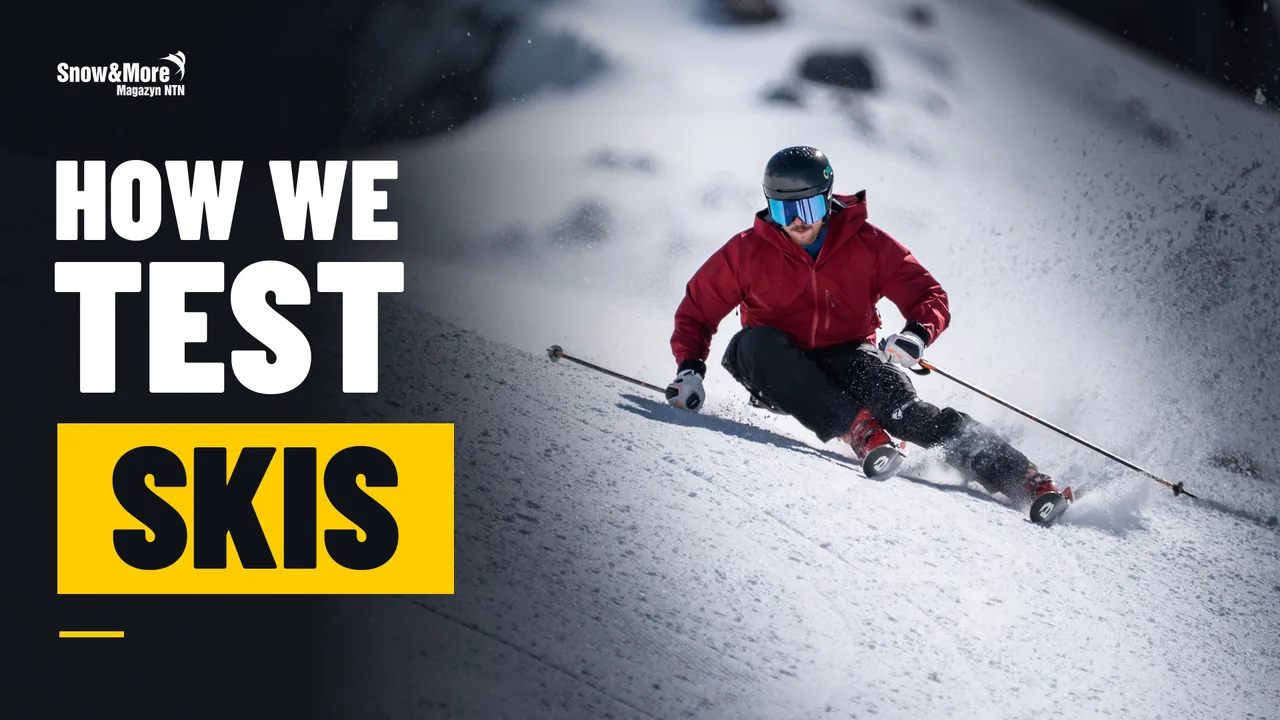
Watch our ski test in action, with English audio and subtitles available on YouTube.
Magazyn NTN Snow & More
Writing about the Independent Ski Test for the umpteenth time is no easy task. Yet it has to be done, because every year our test reaches a growing number of new readers. We also introduce new ideas from one edition to the next and welcome new brands. For many years, the Independent Ski Test has been held each spring on the Kaunertal Glacier – with one Covid-era exception – where, in our view, the conditions are ideal for an event of this scale. But let us take things in order…
We’re particularly proud of the Independent Ski Test. Each edition brings together more than a hundred pairs of skis and around seventy wonderfully mad people who spend a week living and breathing skiing. Not bad at all.
First, though, a basic question: who are ski tests for, and what are they for?
In my view, in today’s consumer-driven world, it makes no sense to buy expensive products without first finding out whether they will genuinely suit us. Before buying a new smartphone, you probably search online to learn how long its battery lasts, how good its camera is and so on. Skis are no different. If we took manufacturers’ advertising slogans at face value, virtually every pair would be perfect and best in class. It is difficult to imagine, for example, company X stating on its official website that company Y makes better-looking products that also ski better.
It is genuinely difficult to find a bad ski today, especially at the upper end of the price range. Some models are nevertheless better suited than others to our needs, physical build and abilities. Explaining precisely those differences is what we set out to do. Of all the ski tests conducted around the world, ours provides the longest written review of every model tested. We believe this is exceptionally important, because numerical scores cannot begin to convey a ski’s character. In every review, you will find our testers’ guidance on whether a model is better suited to heavier or lighter skiers, to those with more or less refined technique, to racers or to people who value comfort – and so on.
How We Test
We don’t just put more than a hundred pairs of skis at our testers’ disposal and let chaos reign. Participants are divided into groups, which Michał Szypliński, director of the Independent Ski Test, names after wild animals. So we have pumas, snakes, wild boars, lions and so on.
We use four sets of criteria, matched to what the skis are designed to do. Giant Masters, Giant Slalom, Cross-Turn and Slalom share one set, but we do not assess performance in gates for Cross-Turn. All-Round and Women’s Skis share a second set; All-Mountain has a third, and VIP a fourth. The variety of designs in VIP makes explaining each ski’s character especially important.
We try to test the models in each group in the same conditions and on the same sections of piste. For all-mountain skis, we also seek out more demanding conditions: piles of pushed-up snow, firn and moguls. For safety reasons, we do not encourage testers to leave groomed, marked pistes. After all, this is where most users of these skis will do most of their skiing.
The formal test programme runs from 9 a.m. to 2 p.m., with each group working through set tasks on its assigned skis. After 2 p.m., we switch to what we call the “smorgasbord”: for the next two hours, anyone with enough strength left can ski whatever they like. If the weather turns against us, test director Michał Szypliński adjusts the programme to suit the conditions.
In theory, each participant can take as many runs on a pair as they need to assess it properly. In practice, we usually take two or three long runs. If doubts remain – or, for example, a tester thinks a ski wasn’t prepared correctly – it can always be retested, including during the “smorgasbord” session.
We repeatedly remind participants to assess every ski in their current category on the same pistes, carrying out the same manoeuvres over the same sections. There are always more pairs in a category than there are skiers in the group testing it, so waiting for a particular model is very rarely necessary. Participants are strictly forbidden to help themselves to skis from other categories, under penalty of first a yellow card and then a red one. In the test’s history of more than a dozen years, we have twice had to ask participants to leave because they refused to follow the rules. There you have it!
Who Tests the Skis
Committed skiers, group leaders, ski-shop representatives, former racers and ski instructors. They are united by a shared passion for two planks and a desire to discover new products months before they reach the market in autumn.
Some participants have been joining us for more than a decade – ever since we began organising our own event. We started because we were dissatisfied with our ski-test collaborations with major magazines from Germany and Italy, whose results appeared in the early years of NTN Snow & More. Today, we regard the decision to create our own test as an excellent one, and we are convinced that our results are the most objective – and, we also believe, the best.
Over the years, we have earned the trust of the Polish ski industry, because company representatives know perfectly well that we do not fudge the results. In fact, many of them come to the Independent Ski Test as observers every year.
Where We Test – and Why Kaunertal
Not long ago, I had an interesting conversation with a ski instructor in Andermatt and several other friends. We considered a purely hypothetical question: which ski area would we choose if we had to ski in just one place for the rest of our skiing lives? To everyone’s surprise, I chose Kaunertal.
Why? Snow conditions in Kaunertal are usually phenomenal and, what is more, remain so well into May. The variety of pistes is enormous, ranging from gentle, wide slopes to the Ibex – the steepest piste in Austria. Several slopes are deliberately prepared exceptionally firm for athletes training slalom, while the off-piste possibilities are simply outrageous.
Kaunertal is also rarely – very rarely – crowded. One reason is the demanding drive to the glacier along a road that featured in one of the James Bond films. I personally hope that the road is never substantially upgraded, because it does an excellent job of deterring casual visitors.
Finally, beside the upper glacier car park, we have a wooden hut at our disposal. This is where the skis are exchanged, and the service technicians do not have to work outside in freezing temperatures or blazing sunshine. All of this makes the glacier ski area almost ideal for the needs of the Independent Ski Test – and for mine. Add the extraordinarily friendly and helpful piste staff and resort management, and we have a fantastic home base that we have no intention of changing. What is more, Kaunertal itself is beginning to take pride in hosting our test, which makes us genuinely proud as well.
Who Sets the Bindings and Tunes the Skis
Each brand can send its own technician or leave the work to the Super Serwis team from Warsaw – at 1 Potocka Street, should you need the address. The vast majority choose the latter.
Every year, the Super Serwis crew adjusts bindings throughout the test. At the end of each day, they touch up the edges by hand, wax the skis and prepare them for the next day. Occasionally, more serious damage – to a binding, for example – calls for some improvisation.